
- More Blogs

- 2026 Digital Era: Overseas Business Travel Strategies for Multinational Enterprises - DVGO, an AI-powered Business Travel Platform, Solves Global Business Travel Operation Challenges
2026 Digital Era: Overseas Business Travel Strategies for Multinational Enterprises - DVGO, an AI-powered Business Travel Platform, Solves Global Business Travel Operation Challenges
 May 27, 2026
I. Industry Background: Reshaping Global Business Travel in the Age of Digital Transformation
Entering 2026, the digital economy, artificial intelligence, and cross-border connectivity technologies have fully permeated the global business ecosystem. Global trade collaboration, cross-border project implementation, and multinational corporate cooperation have become normalized development trends. Centered around China, Asia-Pacific industrial clusters in technology, finance, and high-end manufacturing have emerged as key global hubs for business resources, while the frequency of international business exchanges between domestic and overseas enterprises continues to rise.
Against this industry backdrop, overseas business travel is no longer limited to basic logistical tasks such as booking flights and arranging accommodations. For multinational corporations, publicly listed companies, and C-level executives, every cross-border business trip represents a high-investment, high-value, and high-risk strategic deployment of human capital. The smoothness, compliance, and efficiency of the entire travel process directly impact the success or failure of overseas market expansion, business negotiations, and strategic partnerships.
As global business leaders have reached a consensus: "True business insight lies not only in keeping pace with market dynamics, but also in deeply understanding the structure and cultural context of global business regions." To penetrate overseas markets and build stable cross-border partnerships, enterprises must first resolve various obstacles in travel execution.
Today, most multinational corporations face a common challenge: while companies may establish comprehensive globalization strategies at the executive level, the implementation phase of business travel often encounters continuous operational friction, including policy changes, payment limitations, network disruptions, transportation shortages, and language barriers. These issues create a serious disconnect between macro-level strategies and frontline execution. Low operational efficiency, elevated compliance risks, and executive energy being consumed by trivial matters have gradually become hidden weaknesses restricting corporate globalization.
To transform business travel from an operational bottleneck into a competitive advantage, enterprises urgently require a rigorous, reliable, executable, and digitally adaptive global business travel framework. Based on the latest 2026 global immigration policies, digital payment ecosystems, and transportation capacity trends, the following sections will systematically break down enterprise-level global mobility strategies and explain how AI technology, through the DVGO platform, is fundamentally reshaping traditional corporate travel management models.
II. Core Characteristics & Existing Pain Points of Executive Business Travel in the New Era
Traditional corporate travel management primarily focused on cost control, expense reimbursement, and basic scheduling for general employees. However, overseas business travel for executives and key business leaders is characterized by four major attributes: high cost, high expectations, high risk, and high time sensitivity. As a result, the core priorities have shifted toward compliance first, controllable risk, operational efficiency, and seamless travel experiences.
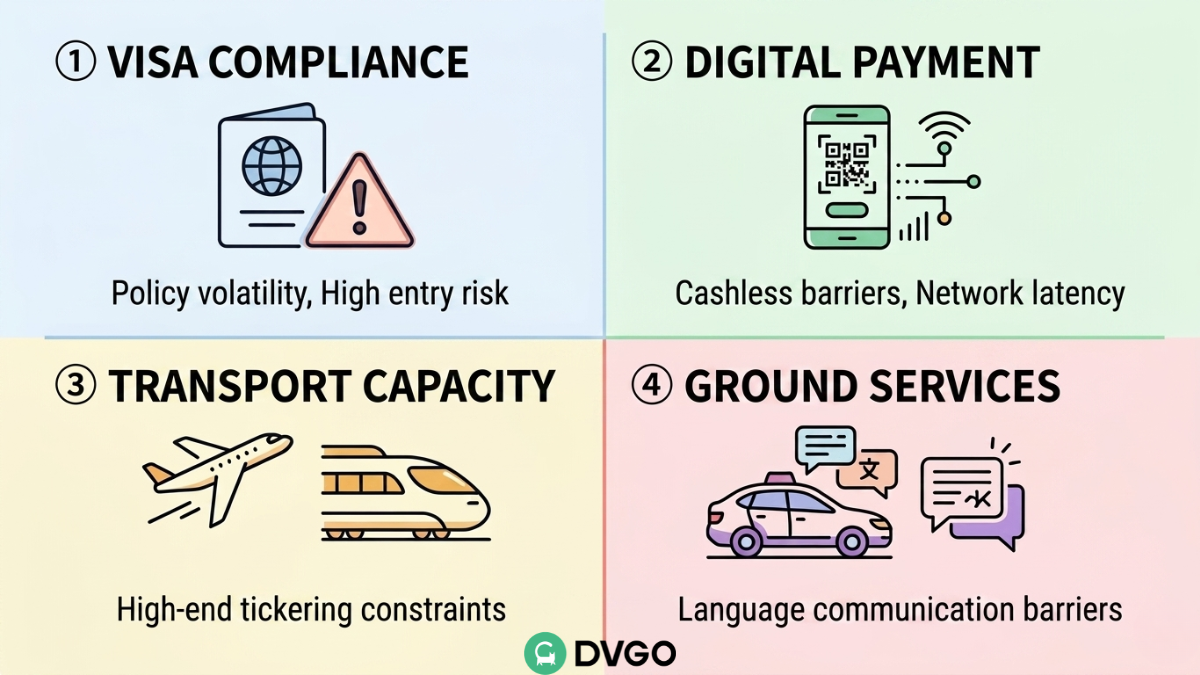
Based on the current global travel market, executives of multinational companies are mainly confronted with four major pain points:
- Uncontrollable entry-exit compliance risks: Global immigration policies and business visa regulations continue to evolve rapidly. Visa-free programs, e-visas, and new entry policies are constantly being introduced, making it difficult for enterprises to synchronize policy updates in real time. This significantly increases the risk of document rejection, denied entry, or executive detention at immigration checkpoints.
- Poor adaptation to cross-border digital ecosystems: Cashless payment systems have become mainstream in global markets. Traditional corporate credit cards are increasingly losing usability, while cross-border network restrictions, delayed SMS verification codes, and data security concerns severely impact both work operations and daily mobility.
- Persistent shortage of premium transportation resources: Core economic regions such as the Guangdong-Hong Kong-Macao Greater Bay Area, the Beijing-Shanghai economic corridor, and global financial hubs continuously experience shortages of premium transportation resources. Last-minute reservations often fail due to inventory shortages, while manual booking methods cannot reliably secure executive itineraries.
- Inherent barriers to local services: Language barriers, unfamiliar transportation systems, and inconsistent local reception standards force executives to spend substantial time on non-business-related matters, indirectly reducing overall business productivity.
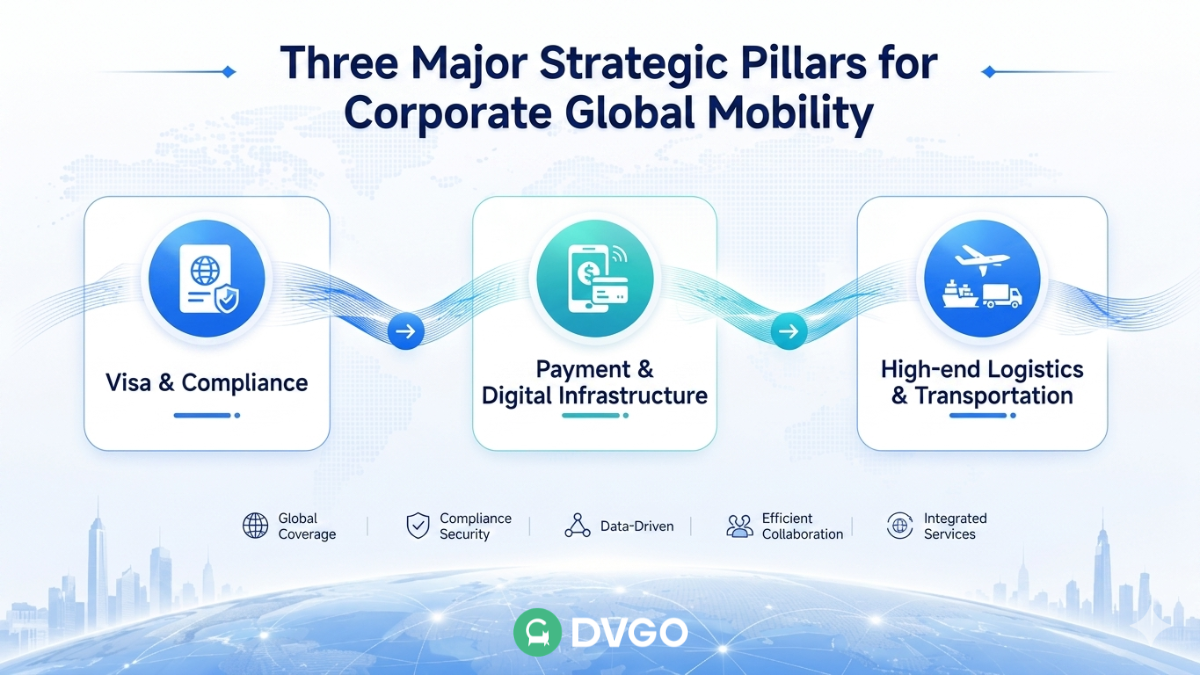
In response to these challenges, this article organizes a comprehensive 2026 enterprise global mobility strategy checklist across three major dimensions: visa compliance, digital infrastructure, and premium transportation logistics. The framework covers both pre-trip planning and real-time operational execution.
III. Full-Scale Execution Checklist for Enterprise-Level Global Mobility Strategy
3.1 Visa & Compliance: The Primary Gateway for Cross-Border Travel
Passports and basic visas are merely the prerequisites for international travel. Given the rapid digitalization and frequent adjustments of global entry-exit regulations, real-time policy monitoring and pre-trip compliance review serve as core measures to avoid entry risks and ensure smooth trips, as well as the first line of defense for corporate travel risk management.
(1) Establish a dynamic audit mechanism for global entry-exit policies
Over the past two years, major global financial centers and innovation hubs have continuously optimized immigration systems. Many countries have expanded unilateral visa-free policies, while digital initiatives such as e-visas, online pre-approval systems, and paperless immigration procedures have become increasingly widespread. Although these policies improve travel convenience, they also place higher demands on enterprises' information synchronization capabilities.
Corporate travel departments are advised to establish a tiered policy monitoring mechanism. Countries should be categorized based on travel frequency, while dedicated personnel track updates related to visa types, business entry standards, permitted stay durations, and temporary restrictions in real time. A "Global Travel Policy Handbook" should be updated monthly and distributed across administration, HR, and overseas business departments to prevent low-level mistakes caused by outdated policy information.
(2) Implement a 3-week pre-trip review mechanism
Unlike personal tourism, international business travel involves extensive supporting documentation, including business invitation letters, overseas assignment statements, proof of entry purpose, and partnership verification materials. Customs and immigration authorities place significant emphasis on these documents. Errors in formatting, incomplete qualifications, or inconsistent information can easily result in executive detention, itinerary disruption, or reputational damage to the enterprise.
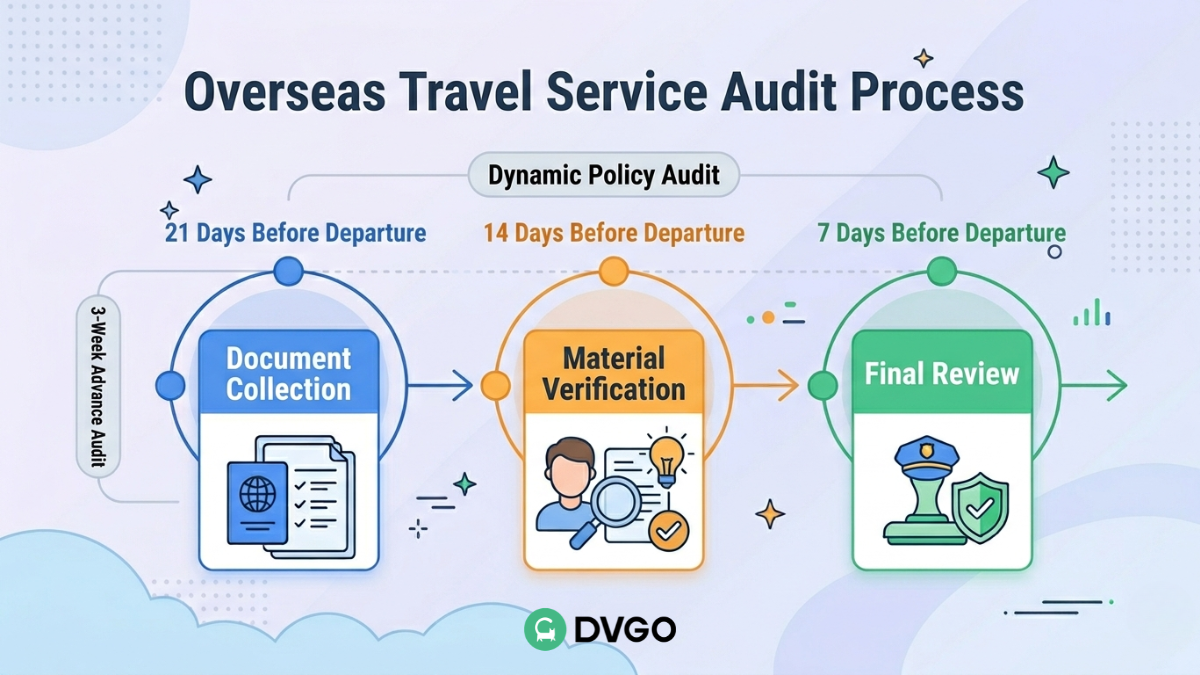
Based on extensive business travel operational experience, launching a structured compliance review process three weeks before departure is considered the optimal strategy. The execution framework can be divided into three stages:
- 21 Days Before Departure: Collect passports, cooperation materials, and assignment documents for all travelers to complete foundational information consolidation.
- 14 Days Before Departure: Verify every document against the latest destination immigration policies, ensuring qualification validity, official seals, and logical consistency.
- 7 Days Before Departure: Conduct final reviews while synchronizing online visa appointments and immigration declarations to eliminate all remaining risks.
This standardized pre-review process effectively minimizes the majority of immigration compliance risks at their source.
3.2 Payment & Digital Infrastructure: Break Cashless Barriers & Data Transmission Obstacles
Once executives enter highly digitized overseas markets, traditional business travel operational logic becomes obsolete. Major global business cities have already established fully cashless ecosystems. Robust cross-border digital infrastructure has therefore become the foundation for maintaining executive productivity, business negotiations, and daily mobility.

(1) Resolve the cashless dilemma and build a cross-border payment system
In mobile-payment-dominated markets such as China, traditional physical corporate credit cards are increasingly unsupported across offline retail, business dining, and urban transportation scenarios. This creates the "cashless paradox," where executives possess valid payment cards but cannot effectively use them.
To address this issue, enterprises must complete cross-border digital wallet verification before departure and deeply integrate corporate and personal accounts into local digital payment ecosystems. Enterprises should also implement account segmentation strategies that distinguish between corporate settlement accounts, personal expense accounts, and emergency reserve funds. This approach ensures compatibility with local payment environments while maintaining internal financial compliance standards.
(2) Safeguard data sovereignty and ensure seamless network & communication
Cross-border office operations, business application access, and online collaborations all depend on stable and compliant network environments. However, international network restrictions, data transmission regulations, and delayed SMS verification systems remain critical operational risks.
Enterprises should deploy secure and compliant enterprise-grade VPN solutions in advance while strictly adhering to local data security regulations to safeguard corporate intellectual property and operational data. Depending on destination and trip duration, companies should also proactively activate international roaming services or configure local eSIM solutions.
Since most local business software, transportation platforms, and financial applications rely heavily on SMS verification, network instability and delayed signals can easily interrupt workflows. Complete pre-deployment of communication, network, and verification systems is therefore essential for achieving seamless digital business travel experiences.
3.3 Premium Logistics & Transportation: Enhance Travel Flexibility & Operational Efficiency
Premium business travel resources are chronically insufficient in major global economic corridors. To guarantee flexible and efficient itineraries for executives, enterprises must abandon the traditional model of last-minute bookings and manual scheduling, and establish a forward-looking premium transportation support system.
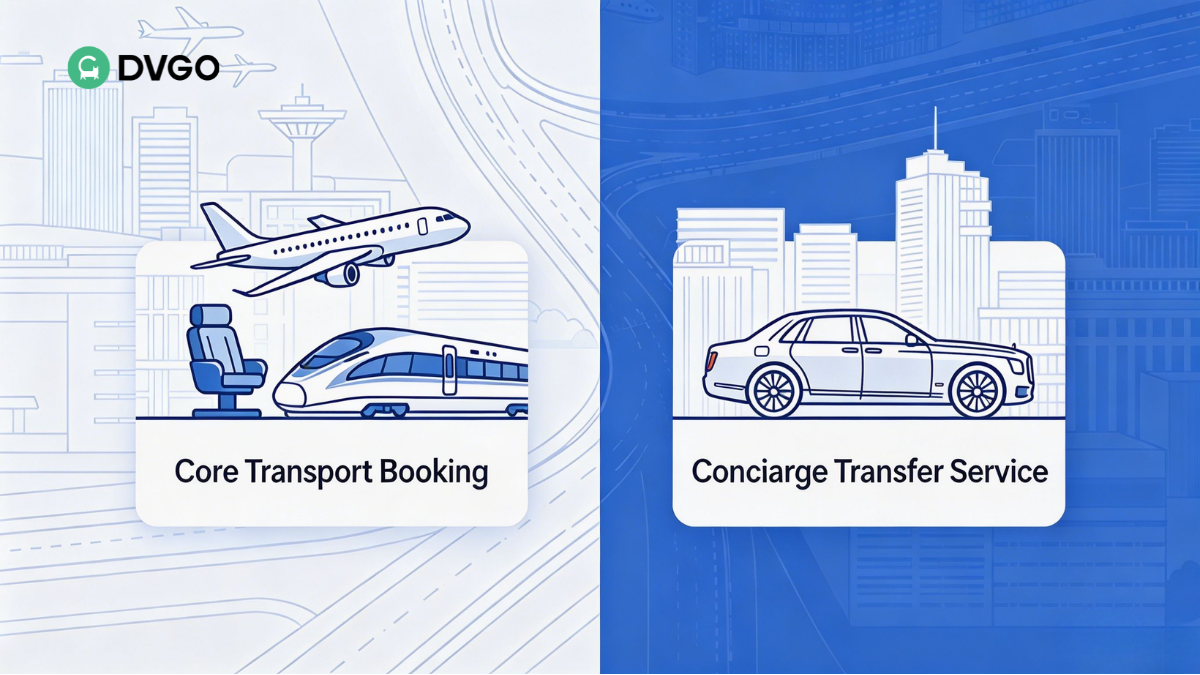
(1) Make advance arrangements for tight transportation capacity in key routes
High-demand economic regions such as the Guangdong-Hong Kong-Macao Greater Bay Area, Beijing-Shanghai routes, and international financial centers frequently experience immediate sellouts of premium airline cabins and high-speed rail business-class seats. Manual multi-platform ticket searches consume significant manpower while still failing to guarantee stable itineraries.
Enterprises should adopt compliant automated enterprise booking platforms capable of leveraging big data to forecast peak traffic periods, holiday seasons, and business travel demand. Automated systems can lock scarce ticket inventory in advance while integrating multiple transportation channels and aligning reservations with corporate travel policies and budget standards.
(2) Sign bilingual chauffeur & concierge agreements to eliminate ground travel frictions
Ground transportation remains one of the most frequent touchpoints during overseas business travel. Language barriers, unfamiliar traffic systems, and complex urban transportation conditions continuously drain executive attention and energy.
Enterprises are advised to partner with professional local service providers offering enterprise-level bilingual chauffeur concierge services. Teams equipped with bilingual drivers, strong knowledge of business routes, and premium hospitality standards can provide airport transfers, hotel transportation, business venue pickups, and short-distance mobility services. Unified reception standards eliminate operational friction and allow executives to fully focus on business priorities.
IV. Quick Reference Table for Core Travel Planning Dimensions
For convenient review and implementation by corporate travel managers, key challenges, strategic solutions, and operational tips of the three planning dimensions are summarized below:
| Planning Dimension | Core Challenges | Strategic Solutions | Supplementary Operational Tips |
| Visa & Compliance | Frequent updates of global entry-exit policies, strict business entry reviews; document errors may lead to customs detention. | 1. Build a global policy monitoring system; 2. Launch full compliance reviews three weeks before departure. | Establish exclusive policy archives for each destination with monthly updates by dedicated staff; adopt unified official document templates to reduce errors. |
| Digital & Financial Infrastructure | Traditional corporate credit cards are incompatible with cashless scenarios; unstable cross-border networks and delayed verification codes affect app usage. | 1. Complete digital wallet verification before travel; 2. Deploy enterprise VPNs and eSIM solutions. | Separate accounts for corporate settlements and personal consumption, and improve financial ledgers; prioritize network tools complying with local data regulations to avoid compliance risks. |
| Transportation & Ground Logistics | Shortage of premium tickets in core economic zones; language barriers and unfamiliar road conditions hinder travel. | 1. Use automated booking platforms; 2. Establish bilingual chauffeur concierge partnerships. | Formulate long-term ticket plans based on peak and off-peak seasons; unify corporate chauffeur service standards matching executive travel grades. |
V. Embrace Intelligent Transformation: DVGO AI Travel Platform Redefines Corporate Travel Management
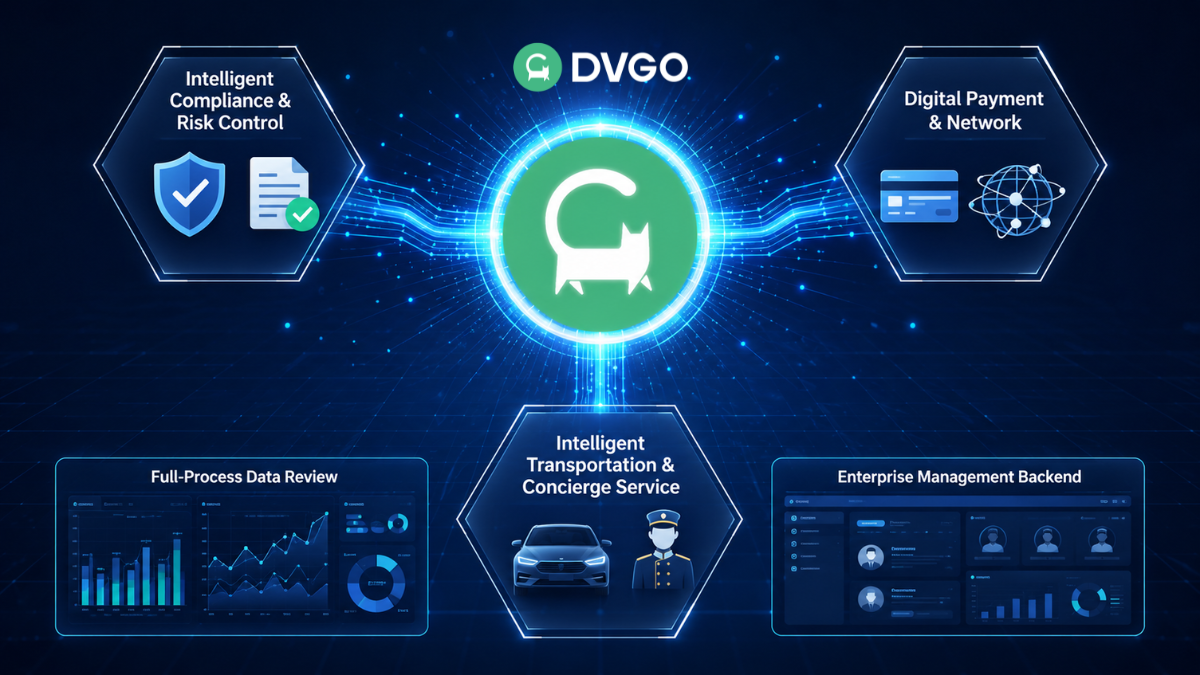
In the fully digitized business environment of 2026, traditional business travel management methods based on Excel spreadsheets, manual verification, and fragmented offline communication can no longer support the pace of global corporate expansion. Manual workflows suffer from low efficiency, delayed risk alerts, weak resource integration capabilities, and minimal tolerance for operational errors. As overseas travel frequency and executive mobility continue to increase, these risks become exponentially amplified.
For enterprises seeking organizational agility and digital management transformation, deep integration of intelligent automation throughout the business travel lifecycle has become an unavoidable industry trend. DeepVoyage Go (DVGO) is a highly integrated AI-powered corporate travel platform specifically designed for multinational enterprises. Its mission is to systematically eliminate hundreds of structural friction points across global business travel operations and transform complicated logistical coordination into a seamless, efficient, and stress-free travel experience.
5.1 Core Positioning & Technical Advantages of DVGO
DVGO is far more than a ticket or hotel booking platform. It is a comprehensive enterprise-grade global travel management solution that covers pre-trip planning, real-time execution, and post-trip data analysis. Powered by artificial intelligence, big data, and intelligent automation technologies, DVGO deeply integrates global flight, rail, hotel, visa, payment, network, and chauffeur concierge resources into a unified ecosystem.
Whether supporting short-term executive trips, large-scale overseas inspections, or long-term international assignments, DVGO provides flexible, standardized, and intelligent travel management systems fully adapted to the highly digitized global business environment of 2026.
5.2 Full-Scenario Implementation of DVGO to Solve Core Travel Pain Points
Based on the three major travel management modules mentioned above, DVGO empowers the entire workflow with AI to fundamentally resolve corporate travel difficulties:
1. Intelligent Compliance Management
DVGO features a 24/7 AI-powered global immigration policy monitoring engine that automatically tracks visa regulations, visa-free policies, and entry control updates worldwide while issuing real-time risk alerts. Built-in standardized business document templates and intelligent online review systems streamline document verification and archiving, dramatically improving compliance efficiency and accuracy.
2. Integrated Digital Infrastructure Configuration
The platform integrates major global cross-border digital payment systems, enabling enterprises to centrally manage digital wallets, identity verification, account binding, and fund supervision. DVGO also intelligently recommends compliant VPN services, eSIM packages, and roaming plans based on travel destination and duration.
3. Intelligent transportation scheduling & premium concierge services to boost travel efficiency
Leveraging big data passenger flow analysis algorithms, DVGO accurately forecasts transportation demand fluctuations and proactively secures premium transportation inventory such as business-class flights and high-speed rail executive seating. The platform also integrates global bilingual chauffeur and concierge resources into a unified reservation and management system.
5.3 Core Business Value of DVGO: Unleash Corporate Human Capital Potential
For multinational enterprises, the ultimate goal of business travel management is not simply reducing travel expenses. It is enabling top talent to escape operational distractions. DVGO's end-to-end intelligent travel management system automates visa processing, compliance checks, payments, networking, transportation, and reception services, allowing executives and key business teams to fully concentrate on market expansion, strategic negotiations, partnerships, and innovation.
Additionally, DVGO provides comprehensive travel data analytics capabilities, automatically aggregating travel frequency, cost structures, risk events, and resource utilization metrics. These insights help enterprises optimize globalization strategies, refine travel policies, and transform business travel management from transactional administration into data-driven strategic management.
VI. Conclusion & Action Guidelines for Corporate Travel Optimization
In 2026, digitalization and globalization have become the two defining themes of modern business development. Overseas business travel has officially evolved from a basic administrative task into a strategic component of multinational corporate expansion. Visa compliance, cross-border digital infrastructure, and premium transportation logistics now form the three foundational pillars of enterprise global mobility management. Weaknesses in any of these areas can directly hinder overseas business growth.
Traditional, fragmented, and manual travel management systems can no longer adapt to the complexity of today's global mobility environment. Implementing AI-powered travel platforms and establishing systematic global mobility frameworks have become essential steps for enterprises seeking to reduce operational risk and enhance competitiveness.
With its full-chain AI capabilities, global resource integration network, and rigorous compliance management systems, DVGO has emerged as a leading solution for modernizing enterprise business travel management. By transforming operational friction into competitive advantage, DVGO empowers enterprises to build more resilient and efficient global operations.
If your enterprise is planning to upgrade its international business travel management system and establish a standardized global mobility strategy, you are welcome to visit the official DVGO website to explore comprehensive enterprise-grade travel solutions. You may also download exclusive advanced itinerary matrices from the platform to quickly implement customized travel planning frameworks tailored to your company's operational scale, business footprint, and management requirements, fully empowering sustainable global business growth.