-
More Blogs

-
Canton Fair 2026 Guide: Phase 2 Tips, Dates & DVGO After-Hours Map
Canton Fair 2026 Guide: Phase 2 Tips, Dates & DVGO After-Hours Map
 Apr 22, 2026
If you are attending the Canton Fair 2026 right now, timing is everything. Phase 1 has just ended, and Phase 2 is about to begin. This is the narrow window where preparation directly converts into better suppliers and better pricing. Most buyers arrive with information, but very few arrive with a system.
This guide is built for execution in real conditions, not theory. The difference between a good trip and a profitable one comes down to how fast you filter, how clearly you compare, and how well you retain information across hundreds of interactions. This is where most buyers lose control.
What is the Canton Fair?
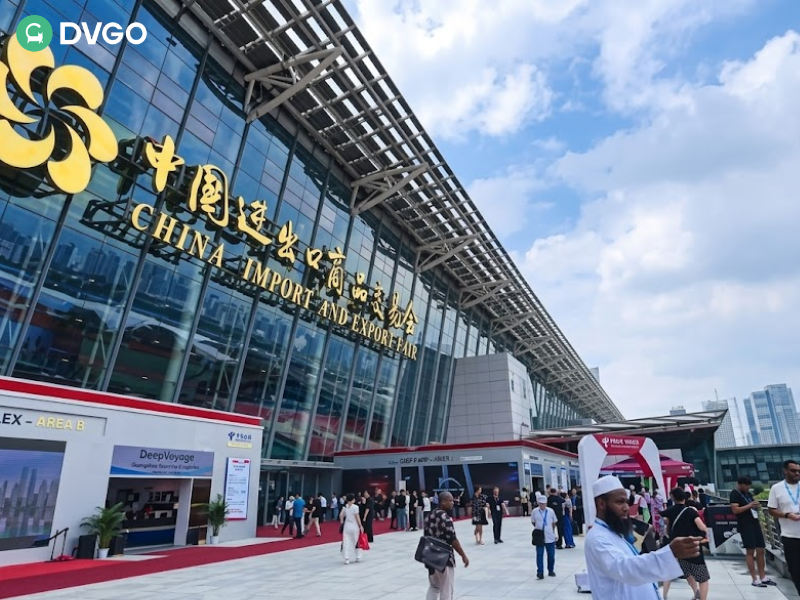
The China Import and Export Fair, widely known as the Canton Fair, is the largest sourcing event in the world. It takes place in Guangzhou every spring and autumn, connecting global buyers with thousands of factories across all major industries.
Location: Canton Fair Complex, Pazhou, Guangzhou, China.
The Challenge: This venue is not just large—it is overwhelming. The exhibition space exceeds one million square meters and is divided into multiple halls and zones. Without a clear movement strategy, buyers can easily lose hours every day. Those lost hours directly translate into missed supplier opportunities and weaker decision-making outcomes. Navigation here is not a matter of convenience; it is a direct profit variable.
Canton Fair 2026 Dates and Phases (Real-Time Status)
You should not attempt to cover everything. Each phase is a different ecosystem. Right now, your focus must align with the current timeline.
| Phase | Date | Core Focus | Key Categories Included |
| Phase 2 | April 23 – April 27 | Consumer Goods | Consumer goods, Home textiles, Personal care products, Toys and children’s products, Pet products and food |
| Phase 3 | May 1 – May 5 | Fashion & Lifestyle | Textile raw materials and fabrics, Fashion accessories and fittings, Cases and bags, Sports and casual wear, Baby and maternity products |
Phase 2 Sourcing Strategy: Overcoming Over-Selection
This phase represents the highest-density sourcing environment of the Canton Fair 2026. Unlike earlier industrial-focused categories, Phase 2 is driven by mass SKUs, fragmented differentiation, and highly similar supplier positioning. In practical terms, buyers will not be facing a shortage of options — the opposite problem emerges: over-selection pressure.
Hundreds of booths may appear to offer comparable products, while real differences in quality, compliance, MOQ flexibility, and export readiness are often not immediately visible. Most buyers unconsciously shift into an “exploration mode” during this phase, spending excessive time comparing aesthetic variations, packaging differences, or minor price deviations. However, in a high-volume consumer goods environment, this approach leads to decision fatigue rather than clarity.
Filtering means establishing strict evaluation boundaries before engaging deeply with suppliers. Without predefined criteria, every booth visit becomes a distraction loop rather than a decision step. A structured filtering logic should prioritize:
-
Minimum order quantity alignment with your real purchasing scale.
-
Manufacturing consistency across batches (not sample-level quality only).
-
Export experience and compliance readiness for target markets.
-
OEM/ODM capability, depending on your product strategy.
-
Stability of pricing logic under volume negotiation.
Once these conditions are applied, the majority of suppliers will naturally drop out of consideration within seconds, without requiring a detailed comparison. The strategic objective is not to understand every supplier in depth. It is to rapidly isolate the 10–15% of suppliers that are structurally viable for negotiation.
In Phase 2, speed is not about visiting more booths. It is about reducing cognitive load as early as possible. Every unnecessary evaluation reduces your downstream negotiation power because attention is a finite resource. The faster you eliminate low-quality or misaligned suppliers, the more time remains for meaningful discussions with high-probability partners — where pricing, customization, and long-term cooperation actually become negotiable.
Pro Tips to Attend the Canton Fair Like a Veteran
Packing & Preparation
Bring 200–500+ business cards because many suppliers still rely on physical exchange, and without it, your follow-up will quickly become inconsistent or disappear entirely. Wear comfortable shoes, and expect 15,000–25,000 steps daily because physical fatigue directly affects your judgment. Once you are tired, you are more likely to accept higher prices and overlook better suppliers, and pre-map your route before entering the venue because random walking wastes hours, while identifying your halls in advance and grouping booths by category and location keeps your movement efficient and your decision-making focused.
On-Site Execution Strategy
Qualify Suppliers in 3 Minutes: Use a fixed structure every time. Ask about MOQ, lead time, export markets, and customization capability. If answers are unclear, move on immediately. Time is your most limited resource inside the fair.
Capture Information Systematically: Do not rely on memory. After ten booths, details start blending together. After thirty, everything looks the same. Take product photos. Record booth numbers. Save supplier names. Tag them by priority. Build your own simple system so you can compare later without confusion.
Watch for Negotiation Signals: Suppliers rarely give their best price directly. Watch for hesitation, conditional language, and bundled offers. These are indicators that there is still room to negotiate. The more suppliers you compare, the stronger your position becomes.
The Real Efficiency Gap Most Buyers Miss
Most buyers believe price is the main factor. It is not. The real problem is execution. Margin loss usually comes from poor navigation, incomplete comparison, and weak information tracking. Small inefficiencies compound across dozens of suppliers and lead to worse decisions. If you do not control your process, the scale of the fair will control you.
Beyond the Fair: Guangzhou After-Hours Strategy
Deals rarely close on the exhibition floor. Conversations during the day are transactional. Real decisions often happen in the evening. Evenings create space for deeper discussion. Suppliers become more flexible. Trust builds faster. Pricing becomes more negotiable.
Most first-time buyers waste this opportunity. They choose random venues, travel too far, and lose structure in their meetings. Experienced buyers do the opposite: they stay close to Pazhou, choose quiet environments, and plan one or two focused meetings each night. Evening meetings are where relationships turn into contracts.
Don’t waste time searching blindly. We’ve already mapped the best business-friendly venues near Pazhou, including official partner bars like The Booze Lab, which are optimized for high-level negotiations. Explore the DVGO Guangzhou After-Hours Map for Canton Fair Buyers and only choose locations within 15 minutes of the exhibition area.
Tactical Wrap-Up
Right now, you are entering the most critical phase of the fair. Your next steps should be immediate and structured:
-
Define your exact product focus.
-
Shortlist 10–20 priority booths.
-
Use a fixed supplier qualification script.
-
Record every interaction clearly.
-
Schedule at least one evening meeting.
Execution speed will determine your outcome.

Conclusion
If you want to avoid getting lost, missing strong suppliers, or wasting time on low-value conversations, the limiting factor is not information; it is execution structure. Buyers who get real results at the Canton Fair are not the ones who walk the most booths; they are the ones who filter faster, compare more clearly, and keep control of every interaction from first contact to final decision.
A structured approach to planning, tracking, and comparing suppliers will always outperform random exploration. If you also need to extend your strategy beyond the exhibition floor, refer to the After-Hours Map to plan high-efficiency evening meetings near Pazhou and turn conversations into actual deals.

When utilizing the After-Hours-Map for networking, remember to simultaneously capture the core concerns and personal preferences that suppliers reveal in these more relaxed, social settings.
Remember: the best business relationships often begin at the booth but are cemented over a shared toast at a venue on our After-Hours-Map. Do not let your strategy come to a halt simply because the exhibition hall closes its doors at 6:00 PM.
We wish you tremendous success at the 2026 Canton Fair!
👉 Explore the full Canton Fair 2026 framework and strategy here:https://www.deepvoyage.ai/en/events/canton-fair-2026/home