
- More Blogs

- Boost ROI at International Exhibitions: 3 Overlooked Business Travel Pitfalls for Exhibiting Enterprises | Executive Business Travel & Logistics Optimization Solutions
Boost ROI at International Exhibitions: 3 Overlooked Business Travel Pitfalls for Exhibiting Enterprises | Executive Business Travel & Logistics Optimization Solutions
 May 27, 2026
True business insight is not only about tracking market trends quickly, but also about understanding the deep structural friction points that emerge when global commerce converges.
As the global offline trade ecosystem fully rebounds, the international exhibition industry is entering a new high-growth cycle in 2026. Major trade fairs such as the Canton Fair, the China International Import Expo (CIIE), global technology summits, and industry expos have become indispensable platforms for cross-border trade, international branding, and business networking.
According to industry statistics, top-tier international exhibitions attract hundreds of thousands of global buyers, exhibitors, industry experts, and business executives per event. For participating companies, total exhibition costs — including booth construction, branding, product logistics, marketing, client hospitality, and business networking — can easily range from tens of thousands to hundreds of thousands of dollars.
Most companies focus their planning and ROI calculations on visible investments such as booth design, product displays, marketing campaigns, and business negotiations. However, one critical factor continues to quietly erode exhibition returns across the industry: the highly localized and increasingly complex travel logistics and executive support infrastructure surrounding large-scale exhibitions.
For executives and core business teams, every minute during an exhibition carries commercial value. When teams continuously lose time and energy dealing with traffic congestion around exhibition venues, unstable cross-border connectivity, payment barriers, or intercity transportation shortages, even substantial exhibition investments struggle to achieve their intended results in lead generation, partnerships, and brand exposure.
Business travel is no longer a secondary support function — it has become a core operational factor that directly impacts exhibition efficiency, team performance, and final ROI.
Based on years of experience serving thousands of global enterprises, multinational corporations, and export-oriented businesses, we have identified three major blind spots in international exhibition travel management. These issues are highly concealed, high-risk, and frequently overlooked by corporate administrative, marketing, and management teams.
This article will break down each travel pain point, analyze the operational risks behind them, and provide practical solutions based on real-world industry experience. It will also explain how DVGO (DeepVoyage Go), an AI-powered intelligent business travel platform, leverages advanced technology and localized service capabilities to build a fully integrated business travel logistics system that strengthens executive logistics support and maximizes exhibition ROI from the mobility side.
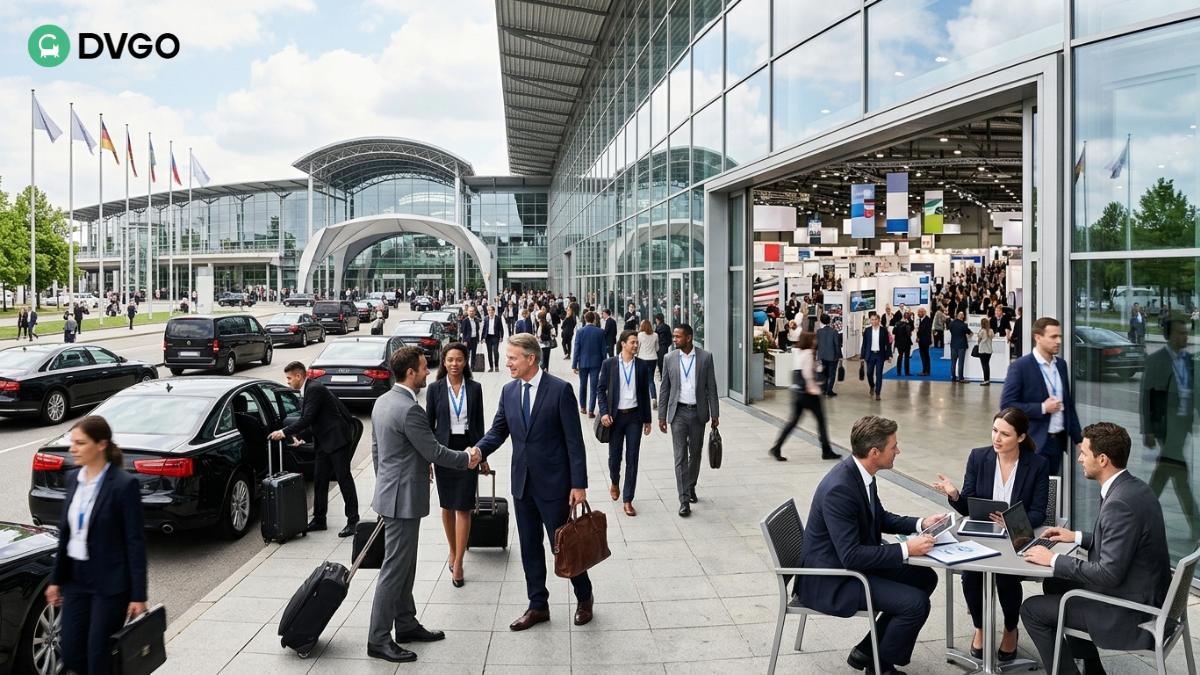
1. The Biggest Blind Spot in Exhibition Travel: Micro-Traffic Congestion and the "Last Mile" Commuting Paradox
In traditional corporate travel management, securing international flights, high-speed rail tickets, and luxury hotels is often considered sufficient for premium business travel.
This logic may work for regular business trips, but it fails completely in the concentrated and highly dynamic environment of major international exhibitions.
The greatest travel risks during exhibitions rarely come from long-distance transportation. Instead, they arise after arrival — specifically during short-distance commuting between airports, railway stations, hotels, and exhibition venues. This is what the industry refers to as the "last mile" paradox, and it is the number one hidden pain point in exhibition travel.
1.1 The Real Challenges and Hidden Risks of Last-Mile Transportation
At mega exhibitions such as the Canton Fair and CIIE, the area within a five-mile radius of the venue experiences constant traffic surges throughout the event period.
Morning arrivals, lunchtime meetings, evening departures, and late-night client entertainment sessions create four major daily congestion peaks, often resulting in severe traffic paralysis. Temporary road closures, traffic controls, and overwhelming vehicle volume become the norm, rendering ordinary transportation methods highly inefficient.
The damage caused by this short-distance congestion is far more serious than it appears:
- First, executives may miss critical business opportunities. Delays can disrupt scheduled meetings with overseas buyers, signing ceremonies, or industry forums, damaging both business outcomes and corporate image.
- Second, prolonged time spent in traffic significantly drains energy and reduces performance during negotiations and presentations.
- Third, communication barriers intensify for foreign executives unfamiliar with local roads, languages, and transportation systems.
- Fourth, decentralized ride-hailing arrangements create coordination chaos and increase safety and management complexity for group delegations.
Many companies willingly spend heavily on international flights and luxury accommodations while underestimating the importance of short-distance commuting logistics. As a result, minor operational gaps end up undermining the effectiveness of the entire exhibition investment.
1.2 The Fatal Limitations of Traditional Transportation Options
To address exhibition-area congestion, many companies rely on ride-hailing apps, taxis, or public transportation. However, each solution has major flaws:
- Ride-hailing services become overwhelmed during peak hours, often involving long wait times and unstable vehicle availability.
- Traditional taxis offer inconsistent service quality, route inefficiencies, and limited bilingual support.
- Public transportation is crowded, time-consuming, and unsuitable for executive-level privacy, efficiency, and image requirements.
All of these options are fundamentally reactive rather than proactive. They force travelers to adapt to traffic conditions instead of strategically avoiding congestion altogether.
1.3 The Core Strategy: Customized Executive Commuting Solutions
To truly solve the "last mile" problem, companies must move beyond fragmented transportation arrangements and adopt integrated commuting solutions that combine route planning, local reconnaissance, and dedicated executive transportation.
Professional exhibition travel service teams conduct advance site inspections around exhibition venues, analyze traffic restrictions and peak congestion patterns, and prepare multiple alternative routes for different schedules.
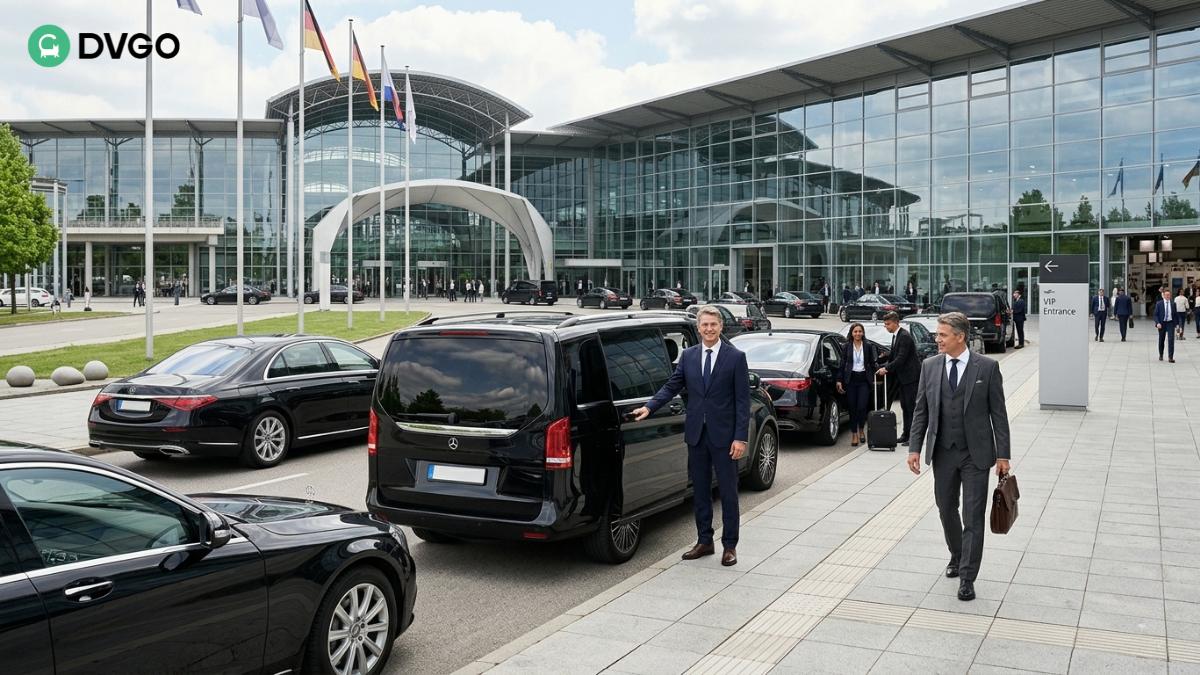
Executives and core teams are then supported with premium business vehicles and dedicated bilingual drivers, ensuring seamless point-to-point transfers between airports, train stations, hotels, exhibition venues, and business dining locations.
This approach delivers four critical advantages:
- Proactive congestion avoidance
- Reliable punctuality
- Enhanced privacy and executive comfort
- Full-service travel accompaniment
As a result, executives can focus entirely on high-value exhibition activities without wasting time and energy on transportation logistics.
2. The Second Blind Spot: Digital Infrastructure Gaps and Identity Verification Barriers
Today's international exhibitions have undergone comprehensive digital transformation.
From venue access and identity verification to digital credentials, food ordering, networking, live streaming, and business matchmaking, nearly every aspect of the exhibition experience is deeply integrated with local digital ecosystems.
Major Chinese exhibitions such as the Canton Fair and CIIE heavily rely on local mini-programs, dedicated venue apps, regional networks, and domestic mobile payment systems.
However, major differences in digital infrastructure, authentication rules, payment systems, and network environments between countries create significant operational barriers for overseas teams and foreign executives.
Most companies still focus only on physical logistics — flights, hotels, and transportation — while neglecting digital preparation entirely.
As a result, digital friction becomes a major obstacle that slows down exhibition efficiency.
2.1 Cross-Border Challenges Inside Digital Exhibition Ecosystems
International business travelers commonly face challenges in four major areas:
- Identity verification barriers: Electronic tickets, exhibition credentials, and VIP event permissions are often tied to local phone numbers and real-name authentication systems. Foreign numbers and overseas IDs may not integrate smoothly, causing lengthy manual verification processes or even access denial.
- Unstable network environments: Large exhibition centers host tens of thousands of connected devices simultaneously. Public Wi-Fi networks frequently experience congestion, lag, and compatibility issues with overseas devices, severely impacting video conferencing and file transfers.
- Local payment restrictions: Venue dining, retail purchases, temporary services, and procurement activities are increasingly dependent on domestic mobile payment systems. International credit cards and overseas payment methods often face limited acceptance and operational inconvenience.
- User interface and operational differences: Foreign executives unfamiliar with Chinese mini-programs and local app ecosystems must spend valuable time learning entirely different digital workflows.
2.2 The Business Losses Caused by Digital Friction
These seemingly small digital issues accumulate into major efficiency losses.
Teams waste valuable exhibition time handling account registration, identity verification, network troubleshooting, payment setup, and platform navigation — distracting them from their primary objectives of networking, negotiations, and business development.
For executive teams operating on tightly packed schedules, every failed verification, unstable connection, or payment issue directly translates into lost time, lost opportunities, and reduced exhibition ROI.
Some companies even expose themselves to cybersecurity risks when overseas devices connect to unsecured public networks.
2.3 Proactive Digital Preparation as the Solution
The core approach to breaking down digital barriers is to front-load all digital preparation work, adhering to the principle of "complete preparation before landing, start working immediately upon arrival" to build a comprehensive "digital readiness" framework.
Professional business travel service providers can offer one-stop cross-border digital support services: before the overseas team arrives in the host city, assist them in advance with real-name authentication on exhibition platforms, e-badge binding, and event permission activation; optimize network configurations for overseas devices and deploy high-speed, stable, and secure dedicated cross-border networks to bypass public Wi-Fi lag and data leakage risks; activate compliant local digital wallets and bind payment accounts in advance to achieve seamless consumption across all scenarios within the venue. At the same time, dispatch on-site technical support staff to resolve device and system operation issues at any time, thoroughly dismantling cross-border digital ecosystem barriers.

3. The Third Blind Spot: Severe Shortages in Premium Air and High-Speed Rail Capacity
Large international exhibitions create massive synchronized intercity travel demand.
During opening days, closing days, and the surrounding 3–5-day peak periods, hundreds of thousands of exhibitors, buyers, and industry professionals travel simultaneously between major commercial hubs such as Guangzhou, Shanghai, Beijing, and Shenzhen.
As a result, premium airline cabins and high-speed rail business-class seats become severely oversubscribed.
3.1 Capacity Crunch Triggered by Concentrated Exhibition Travel
Taking the core economic corridors radiated by the Canton Fair and CIIE as examples: hot routes such as Guangzhou↔Beijing, Guangzhou↔Shanghai, Shanghai↔Shenzhen, and Shanghai↔Hangzhou are the primary choices for exhibitors commuting across cities. Corporate executives and core business personnel prioritize business class, first class, and high-speed rail first-class or business seats out of considerations for travel efficiency, long-distance remote working, comfort, and professional image.
However, during peak exhibition periods, these scarce high-end tickets are often snapped up weeks in advance, leaving individual travelers and corporate administrative staff virtually unable to lock down premium seats through manual booking. Beyond regular return trips and transit travel, unexpected demands frequently arise during the exhibition: extended business negotiations, spontaneous meetings with out-of-town clients, multi-city coordinated exhibitions, or urgent returns to headquarters, all requiring instant itinerary modifications.
During a window of comprehensive capacity crunch, the success rate of ticket changes and endorsements is extremely low, triggering a series of chain risks: executives are forced to get stranded in the host city, disrupting national or even global business schedules; being forced to choose standard seats degrades comfort during long trips, affecting subsequent work performance; team itineraries are forced to split up, increasing management and travel costs; and some enterprises even miss vital cooperation opportunities because key personnel fail to arrive at remote venues on time.
3.2 Limitations and Risks of Manual Ticket Management Models
Currently, most small and medium-sized enterprises and traditional companies still rely on administrative staff to manually monitor tickets, book flights, and handle offline ticketing requests. While this model can function during routine business travel, it exposes multiple flaws when facing a capacity crisis during peak exhibition periods:
- Information Lag: Humans cannot monitor the remaining tickets and schedule changes of thousands of flight routes and high-speed rail lines nationwide 24/7, making it difficult to predict passenger flow trends.
- Low Efficiency: Snatching tickets, changing bookings, and coordinating alternative solutions consume massive amounts of administrative staff's time, encroaching on their core duties.
- Weak Adaptability: Faced with sudden itinerary changes, manual operations cannot immediately match alternative shifts, easily causing travel disruptions.
- Limited Resources: Individual and standard corporate accounts lack the ability to prioritize seat locking or reservations, leaving them to passively accept the reality of zero ticket availability.
3.3 Intelligent Capacity Control: Securing Scarce High-End Travel Resources with Technology
To tackle the challenge of saturated trunk capacity during peak exhibition periods, enterprises must completely break free from manual management models and introduce automated, proactive AI-powered intelligent corporate booking systems to achieve full-process capacity control through technological capabilities.
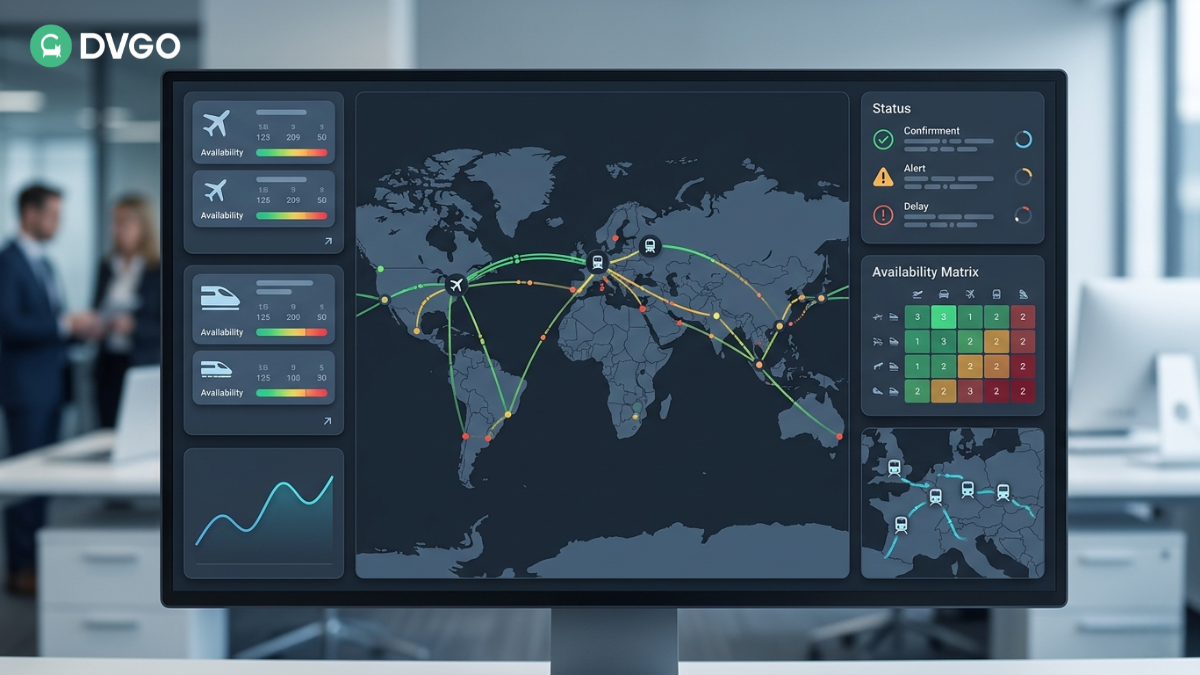
The intelligent business travel system scrapes historical exhibition passenger data and traffic schedule data in advance to predict peak flow trends, proactively locking down business class and high-speed rail business seats the moment ticket sales open. The system supports 24/7 real-time monitoring of national aviation and high-speed rail ticket inventories, schedule adjustments, and temporary cancellations. When a team encounters sudden itinerary changes, modifications, or ticket endorsement needs, the system automatically triggers a dynamic adjustment mechanism, rapidly matching alternative shifts or air-rail combined transport options, and automatically completing modifications and ticket replacements throughout the process.
Relying on an intelligent capacity control system, corporate cross-city travel shifts from "passively grabbing tickets" to "proactively controlling the field," maximizing itinerary stability and flexibility while avoiding risks like being stranded or facing disrupted schedules.
4. Extended Reflection: Why Traditional Corporate Travel Systems Fail to Handle International Exhibition Travel?
Combining the three major travel blind spots mentioned above, we can clearly observe a fundamental difference between a routine business travel management system and the specialized travel requirements of international exhibitions. Many companies directly copy the management model of ordinary business trips to run exhibition travel, which is the root cause of frequent logistics issues.
4.1 Routine Business Travel vs. International Exhibition Travel: Core Differences
| Dimension | Routine Business Travel | International Exhibition Travel |
| Travel Patterns | Dominated by individuals or small teams; scattered travel with staggered timelines; abundant transportation and accommodation resources. | Massive team travel with high concentration; tens of thousands of people moving simultaneously; local resources are extremely strained. |
| Localization Requirements | Low dependence on local road conditions, digital systems, and local services. | Deeply tied to venue traffic, local digital ecosystems, and regional payment architectures; requires extreme localized service capabilities. |
| Emergency Demands | Fixed itineraries with few unexpected emergencies. | Frequent business invitations, spontaneous negotiations, and multi-city transits; high rate of itinerary modifications; strict requirements for real-time emergency adjustments. |
| Service Standards | Standardized service catering to ordinary employees' travel needs. | Service targets are primarily corporate executives and foreign business professionals; standards for privacy, comfort, bilingual service, and professional image are far higher than regular trips. |
4.2 Multiple Loopholes in Traditional Manual Management Models
Relying solely on corporate administrative teams to manually coordinate exhibition travel is not only inefficient but also creates multiple management loopholes: a lack of pre-emptive risk prediction, a lack of localized resource support, an absence of professional emergency plans, and an inability to coordinate full-chain travel resources. When multiple loopholes overlap, they eventually manifest as visible problems like traffic congestion, digital blockades, and ticket shortages, continuously eroding the exhibition ROI.
This also means that to succeed in international exhibition travel management, enterprises must build a business travel service system tailored specifically for exhibition scenarios, rather than sticking to traditional travel models.
5. DVGO Full-Chain Business Travel Solution: Reshaping Exhibition Travel Experience to Boost Overall ROI
The core objective of attending an exhibition is to enable corporate executives and business teams to focus on high-value tasks such as cross-border cooperation, client acquisition, and brand negotiations, rather than getting mired in logistics chores like traffic, networks, and ticketing. DVGO (DeepVoyage Go) is an enterprise-grade intelligent business travel platform deeply developed based on AI technology. With years of deep cultivation in the international exhibition business travel track, it has built a full-process solution tailored specifically to the travel pain points of large-scale expos like the Canton Fair and CIIE.
DVGO positions itself as the invisible business travel logistics protection layer behind corporate exhibitions. By integrating three core capabilities—an AI intelligent system, a nationwide localized service network, and a professional bilingual service team—it provides a one-stop resolution to the three major blind spots mentioned above: micro-traffic congestion, digital authentication barriers, and trunk capacity saturation. It delivers comprehensive, full-cycle executive logistics support for global corporate C-level executives and high-end business teams, maximizing exhibition ROI from the mobility end.
5.1 DVGO's Three Core Service Modules: Precisely Conquering the Three Travel Blind Spots
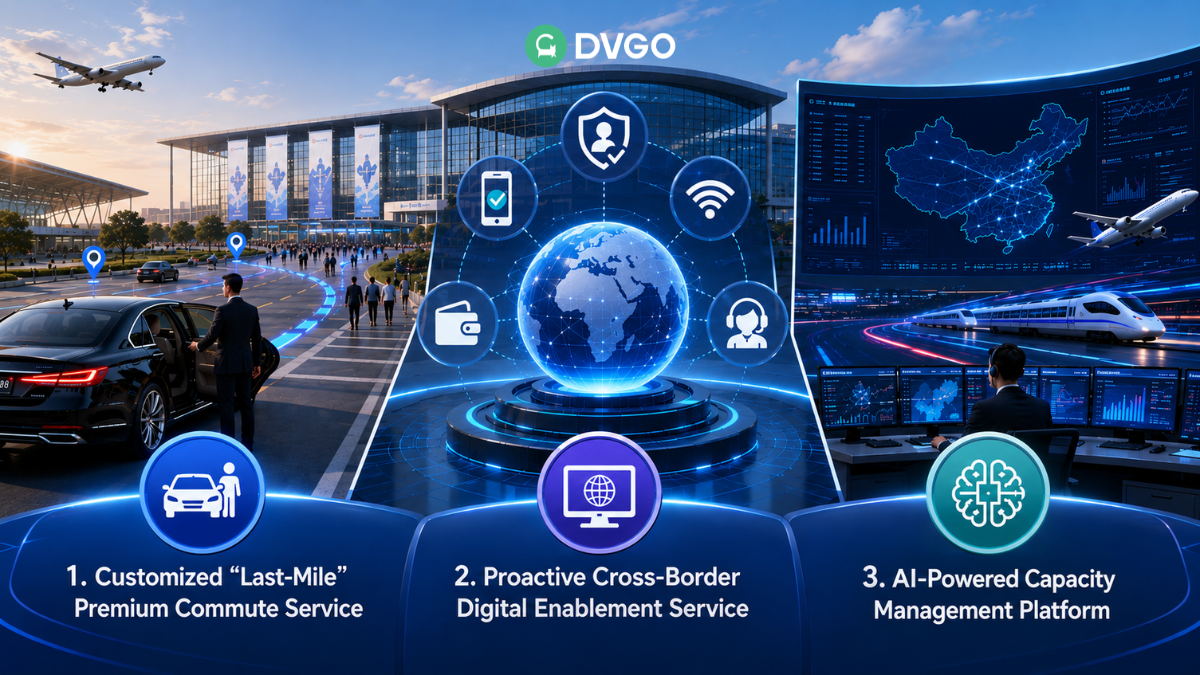
- Customized "Last-Mile" Premium Commuting Service: The DVGO service team studies the road networks, traffic control rules, and pedestrian/vehicle flow patterns of major exhibition cities in advance to customize multiple transit routes for every single exhibition. Paired with high-end business vehicles and certified professional bilingual drivers, it achieves seamless point-to-point transfers across airports, stations, hotels, and venues, proactively avoiding congestion throughout the journey while safeguarding business privacy and travel experience, thoroughly resolving the micro-traffic congestion problem around venues.
- Pre-emptive Cross-Border Digital Supporting Service: Before the exhibition team lands, DVGO completes the entire "digital readiness" process: assisting with real-name authentication on exhibition platforms, e-badge activation, and permission binding; deploying dedicated high-speed cross-border networks to optimize device compatibility for overseas equipment; opening compliant local digital wallets and payment accounts; and assigning on-site technical staff to handle system and network issues at any moment, completely dismantling cross-border digital barriers.
- AI Intelligent Capacity Global Control Platform: Powered by a Big Data + AI capacity prediction system, it covers all aviation and high-speed rail trunks nationwide. It anticipates passenger flow peaks well in advance of exhibitions to proactively lock down high-end ticket resources. Operating 24/7 to monitor ticket inventories and schedule dynamics, the system automatically matches alternative solutions and executes modifications or endorsements the moment sudden itinerary changes arise, thoroughly neutralizing travel risks brought by saturated high-end capacity.
5.2 DVGO's Full-Process Exhibition Travel Service System
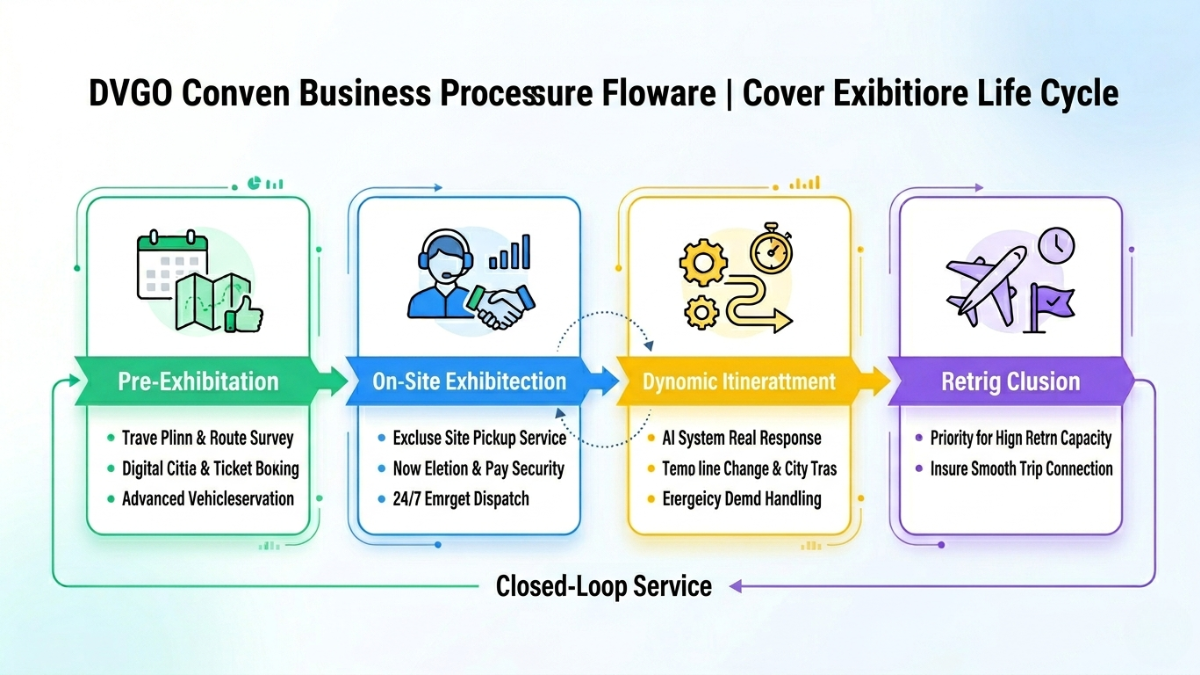
DVGO has created a four-stage closed-loop service system spanning "Pre-exhibition Preparation — In-exhibition Protection — Dynamic Itinerary Adjustment — Post-exhibition Wrap-up," covering the entire lifecycle of exhibition travel:
- Pre-exhibition Stage: Travel planning, route reconnaissance, digital authentication, ticket locking, and vehicle reservations are all front-loaded;
- In-exhibition Stage: On-site exclusive shuttles, network operations, payment guarantees, and emergency dispatch are on duty around the clock;
- Itinerary Adjustment: The AI system responds in real-time to spontaneous rescheduling, multi-city transits, and urgent travel requests;
- Post-exhibition Stage: High-end return capacity is prioritized and locked down to ensure a smooth transition for the return journey.
5.3 AI Technology + Localized Service: DVGO's Core Competitive Advantage
Different from ordinary business travel platforms, DVGO has formed a dual-driven model of "technology + offline service": the AI system handles big data analysis, capacity monitoring, and automated booking, while the nationwide localized service team takes charge of on-site surveys, physical execution, bilingual hospitality, and emergency handling. This model, combining software and hardware, adapts perfectly to the complex, volatile, and high-standard travel scenarios of international exhibitions.
6. Actionable Guide: International Exhibition Travel Optimization Checklist
Based on the three major travel blind spots and DVGO's extensive service experience, we have compiled an actionable execution checklist for international exhibition travel. Enterprises can use this checklist to refine their travel plans, avoiding risks from the source and boosting ROI.
6.1 Pre-Exhibition: Front-loaded Preparation Checklist (15-30 Days Before Opening)
- Commuting Planning: Connect with a professional business travel team, survey the road conditions around the venue, plan multiple alternative shuttle routes, and reserve exclusive business vehicles.
- Digital Preparation: Complete real-name account authentication and e-badge binding for all attendees in advance, and deploy dedicated cross-border networks.
- Ticketing Planning: Rely on intelligent systems to lock down round-trip and cross-city flights and high-speed rail business class seats in advance, reserving alternative shifts.
- Personnel Coordination: Compile a master travel ledger documenting the itineraries, nationalities, and special requirements of all attending personnel.
6.2 In-Exhibition: On-Site Logistics Protection Checklist (Opening Day to Closing)
- Commuting Guarantee: Fix shuttle schedules while dynamically adjusting vehicle timings based on daily business arrangements, assigning dedicated staff for on-site coordination.
- Digital O&M: Station technical personnel on-site to handle network lags, system login failures, and payment glitches immediately.
- Itinerary Emergency: Establish a 24-hour emergency communication channel to rapidly adjust ticketing and vehicle deployments for spontaneous negotiations or cross-city travel.
- Safety Control: Manage team travel collectively, synchronize personnel locations in real-time, and guarantee the travel security of executives.
6.3 Post-Exhibition: Return and Transition Checklist (Within 3 Days Around Closing)
- Return Ticketing: Lock down high-end return seats in advance to bypass the risk of zero ticket availability caused by the closing-day crowd peak.
- Itinerary Linkage: If subsequent business trips exist, complete the linked planning of cross-city ticketing, vehicles, and accommodations in advance.
- Service Review: Document all travel friction points encountered during this trip to optimize the travel plan for the next exhibition.
7. Conclusion: Leveraging Professional Business Travel Logistics to Maximize Exhibition Returns
In 2026, global offline commercial competition has grown increasingly fierce. International exhibitions like the Canton Fair and CIIE remain core battlegrounds for Chinese enterprises to open up overseas markets, link up with global business opportunities, and shape international brands. Today, exhibition competition is no longer confined to products, booths, and marketing capabilities; supporting frameworks such as corporate mobility, international exhibition travel, business travel logistics, and executive logistics support have become critical variables that differentiate exhibition outcomes and determine Exhibition ROI.
The three major travel blind spots—micro-traffic congestion, digital authentication barriers, and high-end capacity saturation—may seem like trivial logistical matters, but they ripple through operations, weakening the total value of an enterprise's exhibition investment. If companies continue to follow traditional manual management and scattered travel models, it will be hard to unleash their full commercial potential, even with a massive exhibition budget.
To achieve high-return operations at international expos, enterprises must redefine the value of travel mobility, incorporate business travel logistics into their overall exhibition strategic planning, and choose a professional, one-stop solution tailored specifically for exhibition scenarios. Relying on its AI intelligent technology and years of deep localized service capabilities, DVGO addresses pain points across the entire exhibition travel chain, allowing executive teams to fully break free from logistical chores and focus entirely on business cooperation and value creation—ensuring every dollar spent on the exhibition converts into tangible commercial returns.
Don't let hidden travel friction drag down your international exhibition performance. Optimize your corporate mobility strategy and perfect your executive logistics support. Start with professional business travel services to comprehensively boost your exhibition ROI.
👉 Explore how DVGO can transform your next international exhibition experience